


MOQ returned from Amsterdam and immediately acquired more responsibilities.
No new core transport revision appeared during September 14–20. Draft 21 remained current. Instead, the ecosystem around it got busier in ways that matter to anyone trying to ship something.
Content protection. Relay software. Installable releases. Cache signaling. Hands-on workshops.
And, because flat video had apparently become insufficiently complicated, several million 3D Gaussian splats.
The stream got another lock
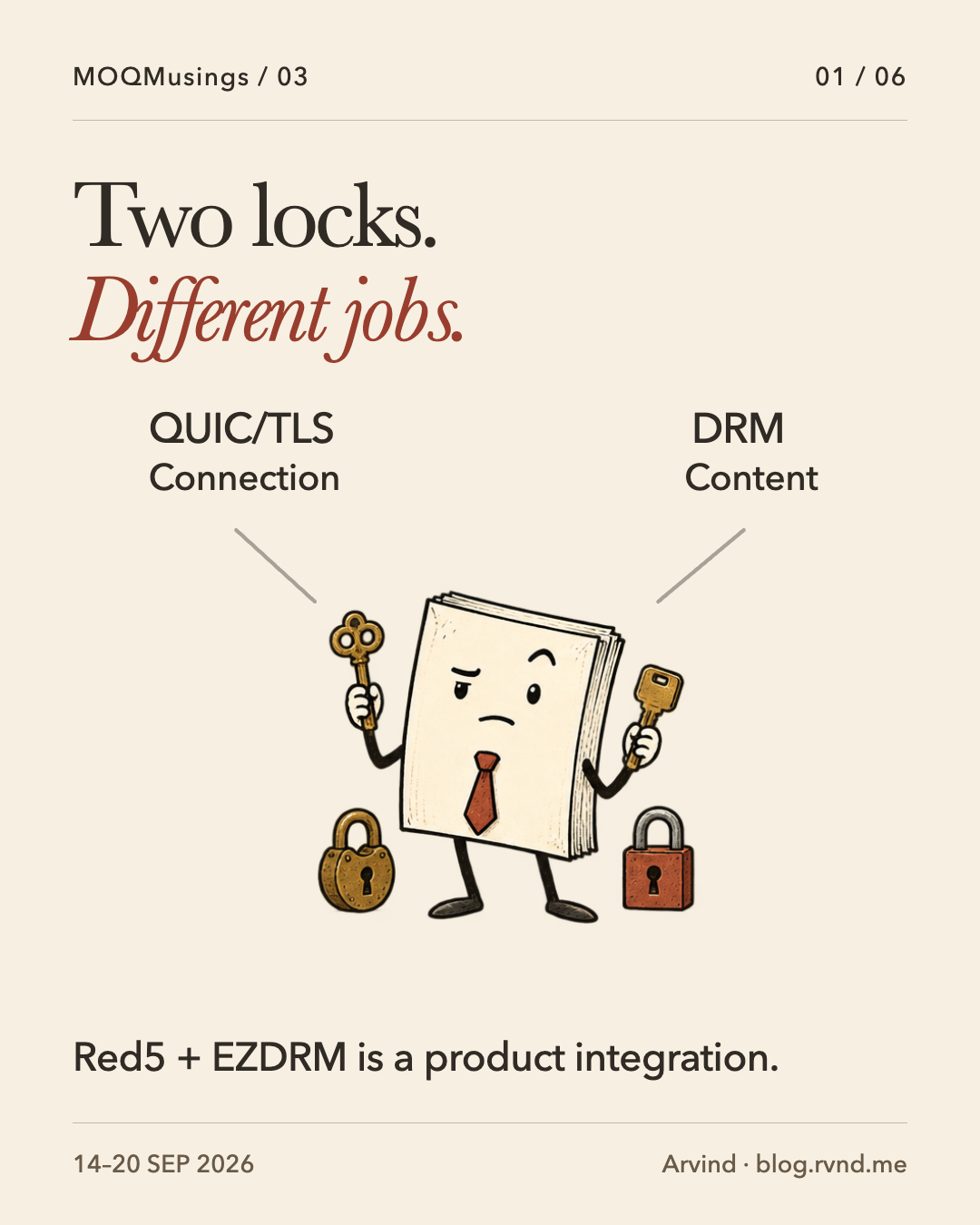
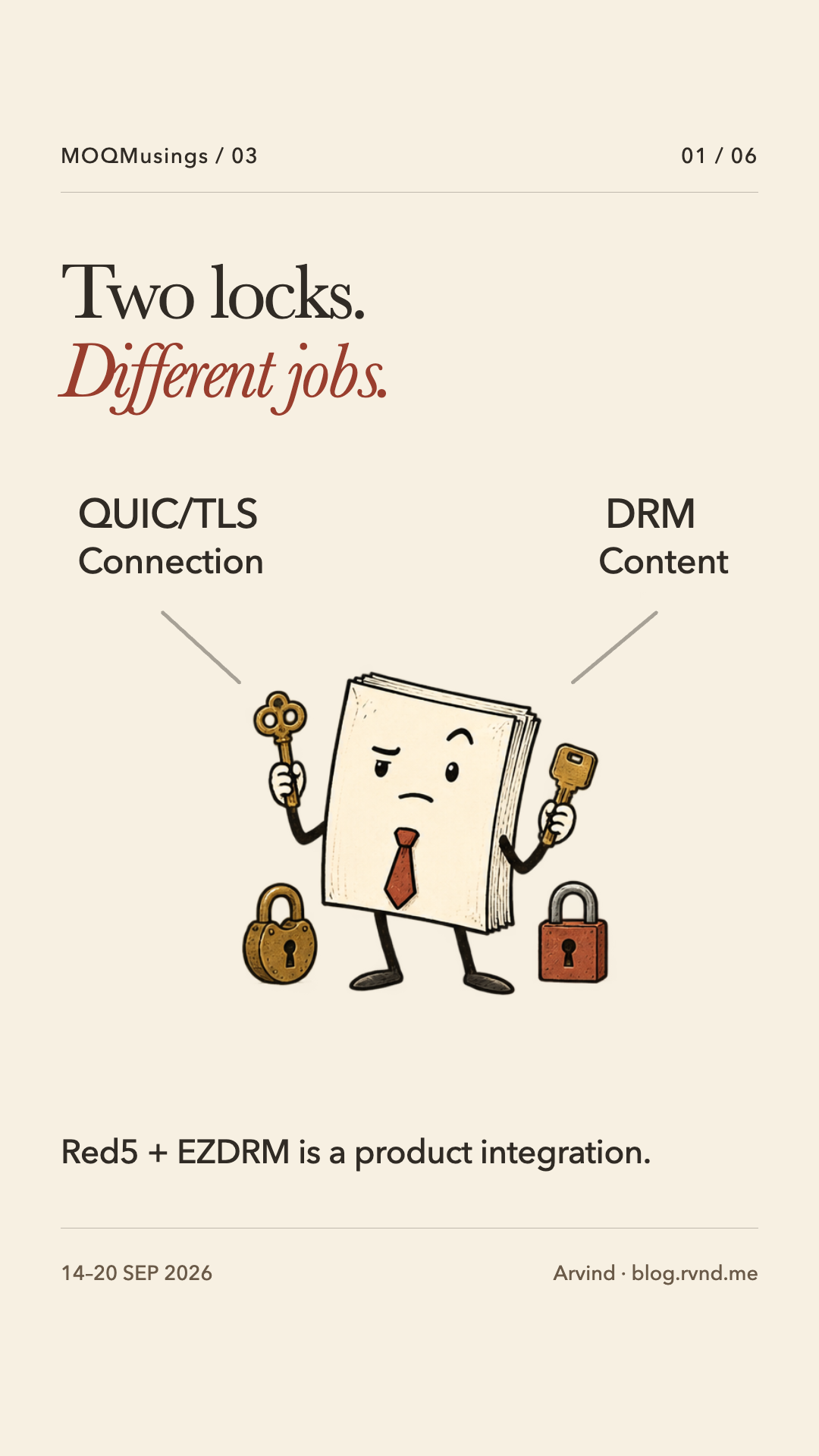
Red5 Pro v16.1.0, announced September 14 and described on September 16, added EZDRM integration. Red5 separately announced the integration on September 15 as part of its Video Packager, including for payloads carried over MOQ-based infrastructure.
There is an important distinction here.
QUIC and TLS protect a transport connection between peers. DRM protects the media through content keys, license policy and playback authorization. They solve different problems.
Studios have historically shown limited enthusiasm for “the connection was encrypted” as a complete rights-management strategy.
This is a product integration, not a change to MOQT. A delivery stack trying to carry premium content over MOQ now has a packaged path to DRM systems already expected by commercial video services.

Relays learned to ask before announcing
Eyevinn shipped moqlivemock v0.15.0 on September 16, and the release is revealing about what happens when a protocol diagram becomes software.
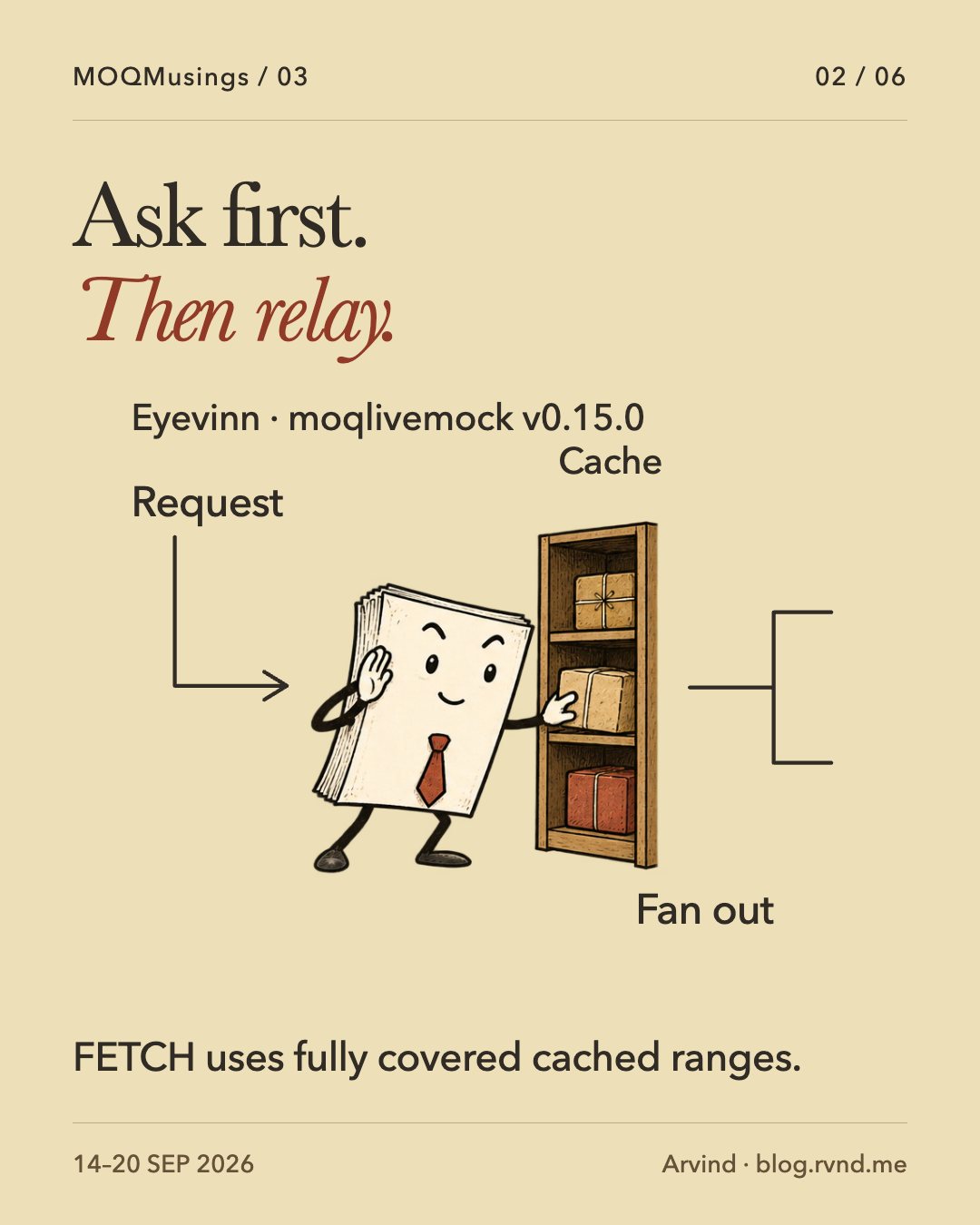
The new mlmrel accepts raw QUIC and WebTransport sessions, forwards subscriptions, fans one upstream subscription out to multiple subscribers, caches recent groups and can serve FETCH requests from that cache when it covers the requested range.
Namespace discovery also becomes pull-based through SUBSCRIBE_NAMESPACE, with namespaces represented as tuples rather than slash-filled single fields.
This is the protocol equivalent of learning not to walk into every room and announce everything you know.
Eyevinn reports that the relay passes all six relay cases in the MOQ interop runner. That is a project-reported result, not an independent certification.
Package management is a maturity model
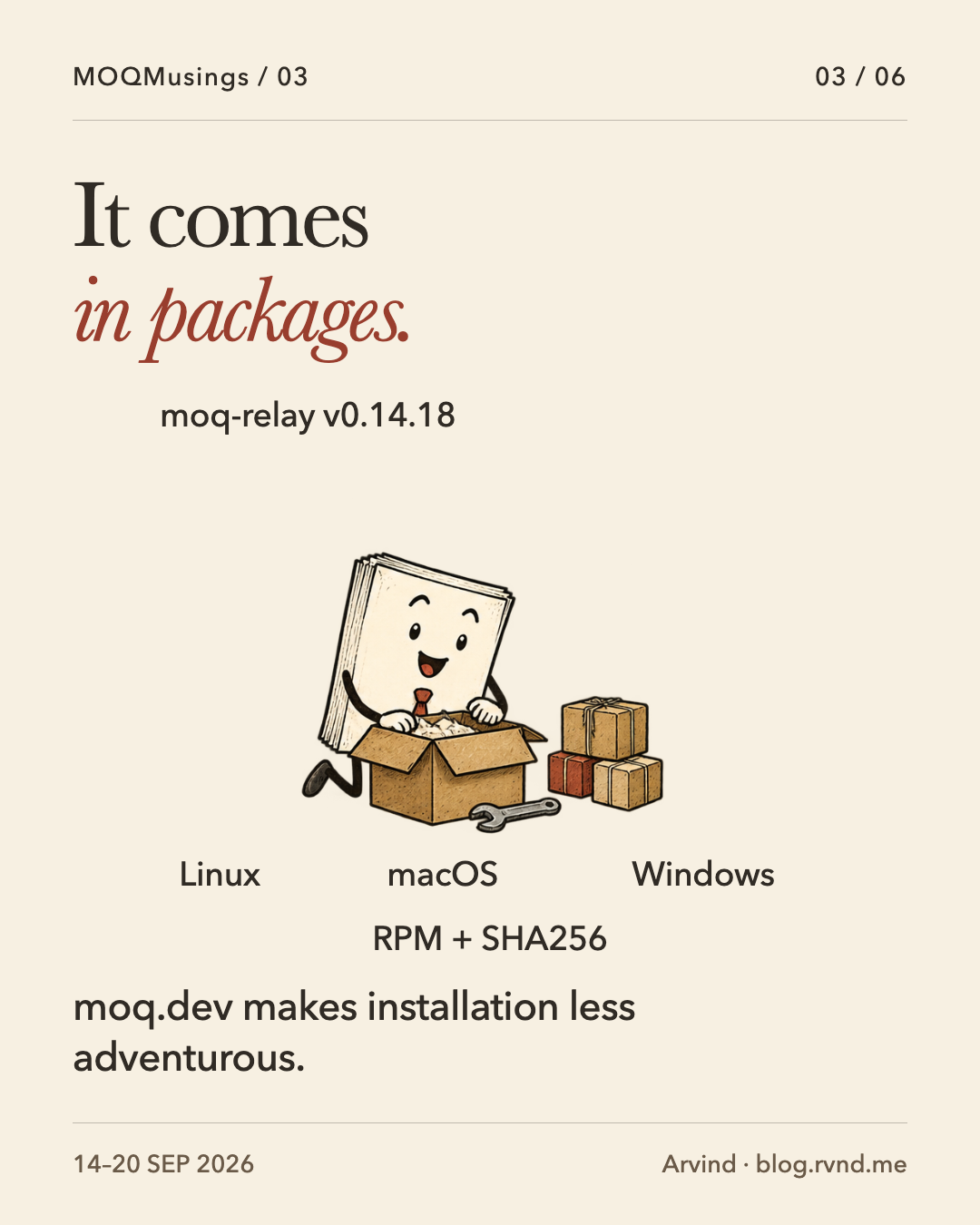
On September 17, moq.dev cut fresh releases including obs-moq v0.5.16 and moq-relay v0.14.18.
The OBS release included GStreamer connection statistics. The relay release shipped platform artifacts across Linux, macOS and Windows, including RPM packages and checksums.
Once an emerging protocol project starts publishing RPMs and SHA256 sums, the glamour has officially ended.
Good.
Installable software, repeatable packaging and observable connections let somebody outside the original team try the thing without first becoming an archaeologist.
Two very specific proposals arrived at the standards desk
Aman Sharma published two individual Internet-Drafts on September 15.
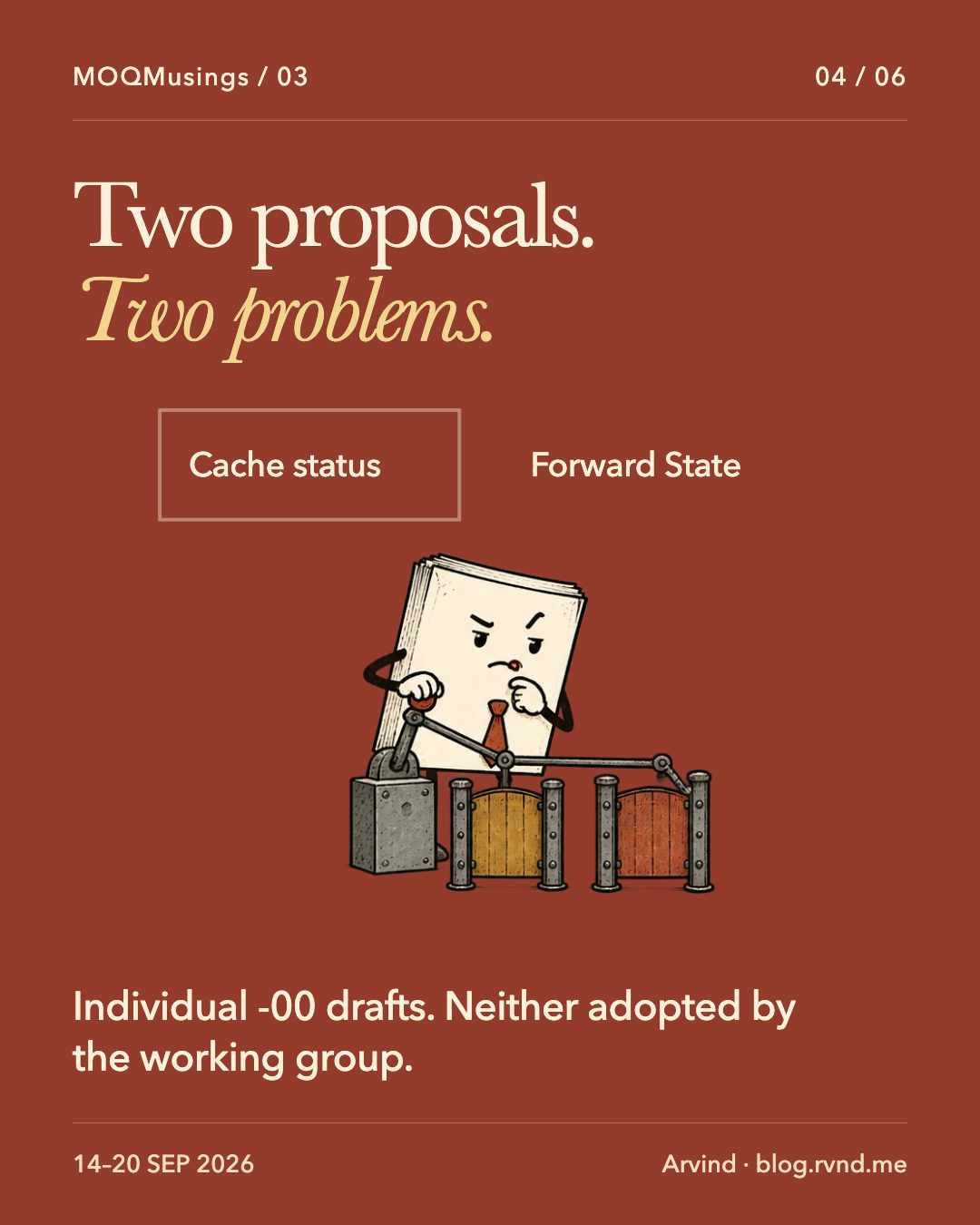
Cache Signaling for MOQT proposes hop-by-hop signals for asking whether a relay has a finite range cached and receiving hit, miss or partial-hit information.
Atomic Subscription Bundles proposes switching the Forward State of a set of existing subscriptions as one operation, avoiding an intermediate state where only part of a multi-track presentation has switched.
The atomic change applies at one peer; it does not guarantee simultaneous object arrival or playback.
Both are -00 individual drafts. Neither is an adopted Working Group mechanism.
“What do you already have?” and “can these tracks switch together?” are exactly the questions that appear after a clean architecture diagram meets a real player.
Kraków turned MOQ into homework
The RTC.ON 2026 programme in Kraków, September 16–18, included a full-day hands-on MOQ workshop led by Luke Curley and Jakub Perżyło. The exercise was to build a MOQ-powered audio/video room call, with faster participants invited to add real-time speech translation.
A technology becomes easier to evaluate when somebody can spend a day building with it rather than a day reading about why they should.
And then there were splats
On September 16, researchers published MoQSplat, a prototype for progressively streaming 3D Gaussian Splatting scenes over MOQ.
The design maps spatial regions onto Tracks, semantically related splats into Groups, and progressive quality into Subgroups on independent QUIC streams. The subscriber requests regions and quality based on what the viewer can see, including view frustum, distance and foveal alignment.
The paper reports a prototype evaluation. This is research, not a production deployment.
Still, MOQT is media-agnostic. Someone was eventually going to decide that ordinary video was too conventional and send a point-cloud rabbit through it.

The signal this week
The core transport draft stayed at 21. Around it, teams added content protection, a more capable relay, packaged releases, cache and switching proposals, developer education and a new 3D research workload.
A protocol starts to feel real when the interesting questions stop fitting inside the protocol document.
This week, MOQ needed a keyring, a package manager and a 3D renderer.
Reasonable progress for seven days.