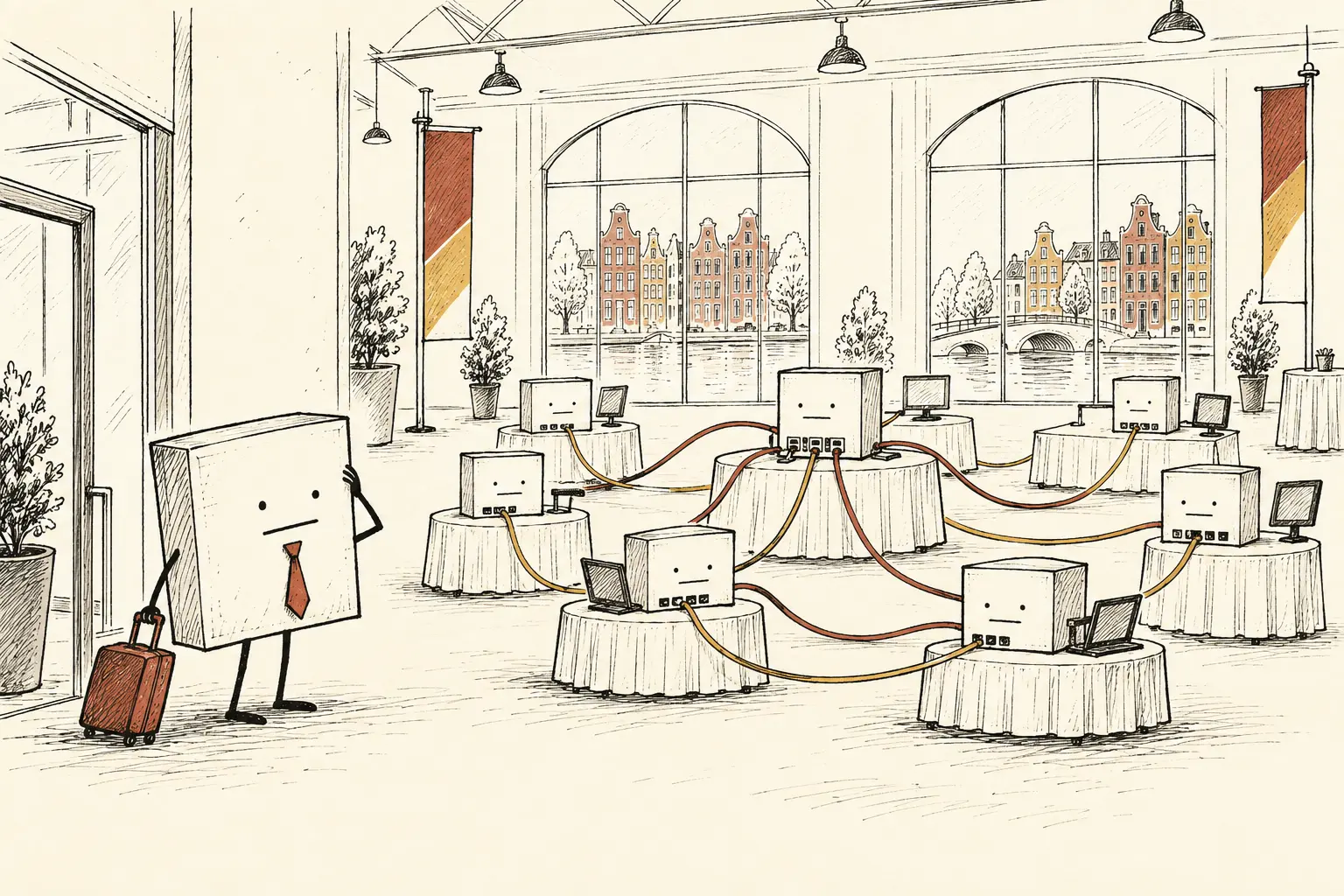
MOQ spent this week in Amsterdam, which is roughly what happens when an emerging protocol stops being a research topic and starts needing comfortable shoes.
There was standards work. There were real products. There were prototypes. There were several companies connecting relay diagrams that, until recently, mostly lived in slide decks.
The interesting shift is that the questions are changing. Less “can MOQ move live media?” More “who runs the relay, which draft are we on, and why is this audio frame carrying a small suitcase of metadata?”
Draft 21 moved the furniture
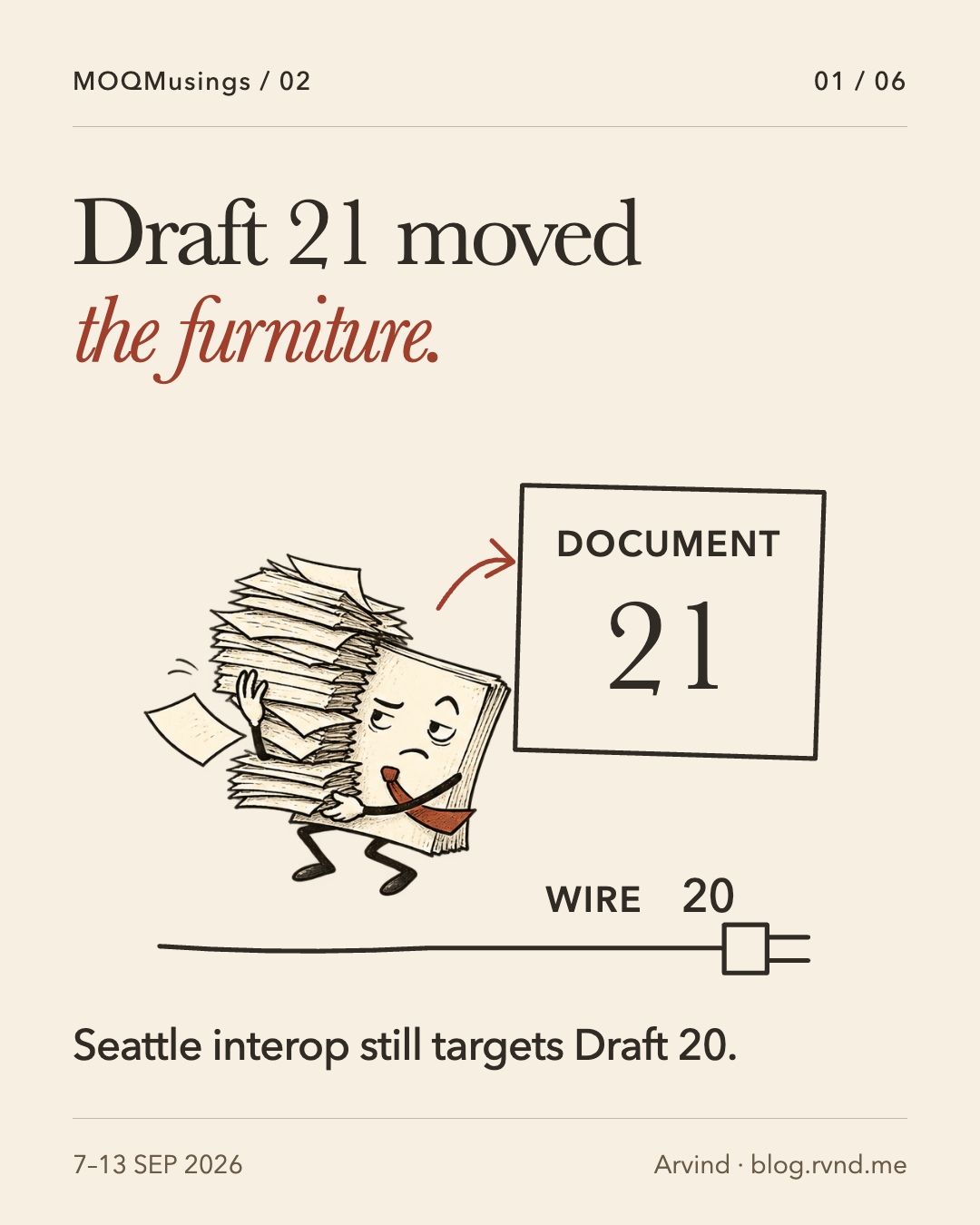
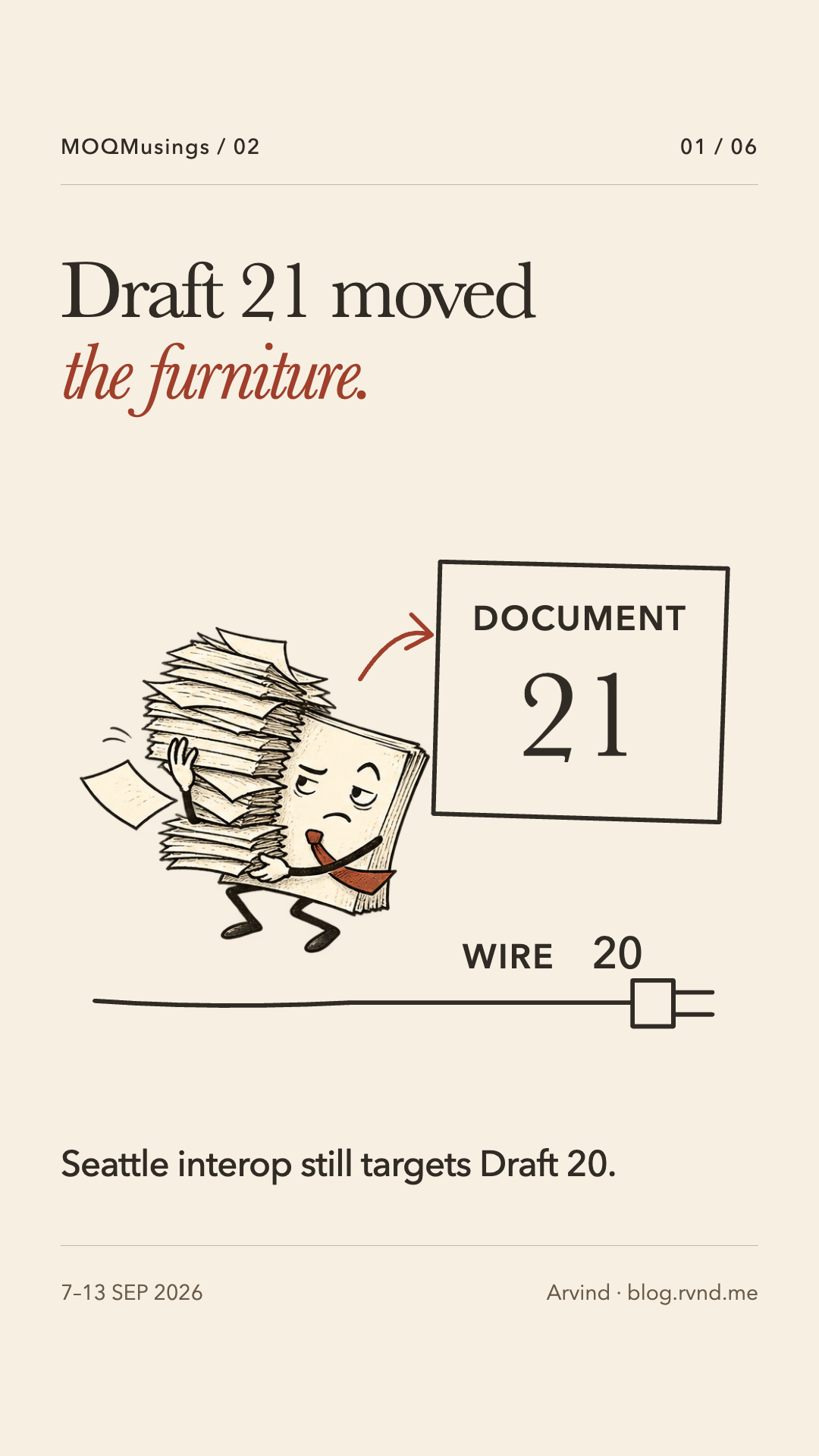
On September 8, the IETF MOQ editors published Draft 21 of the core transport specification.
The exciting new wire feature was: none.
That was deliberate. The revision separated protocol semantics from wire format while keeping the Draft 20 wire behavior in place. A cleaner document, without making implementers chase another moving target.
This is the standards equivalent of spending Saturday rearranging the garage and proudly announcing that the car still starts.

The same September 8 interim picked Draft 20 as the target for the October Seattle interop. Seven implementers expected to support it, five said no, and four had no opinion. More importantly, the group agreed not to merge further wire-breaking changes into that target before the event.
Stability has entered the chat, wearing sensible shoes.
Someone volunteered to run the relays
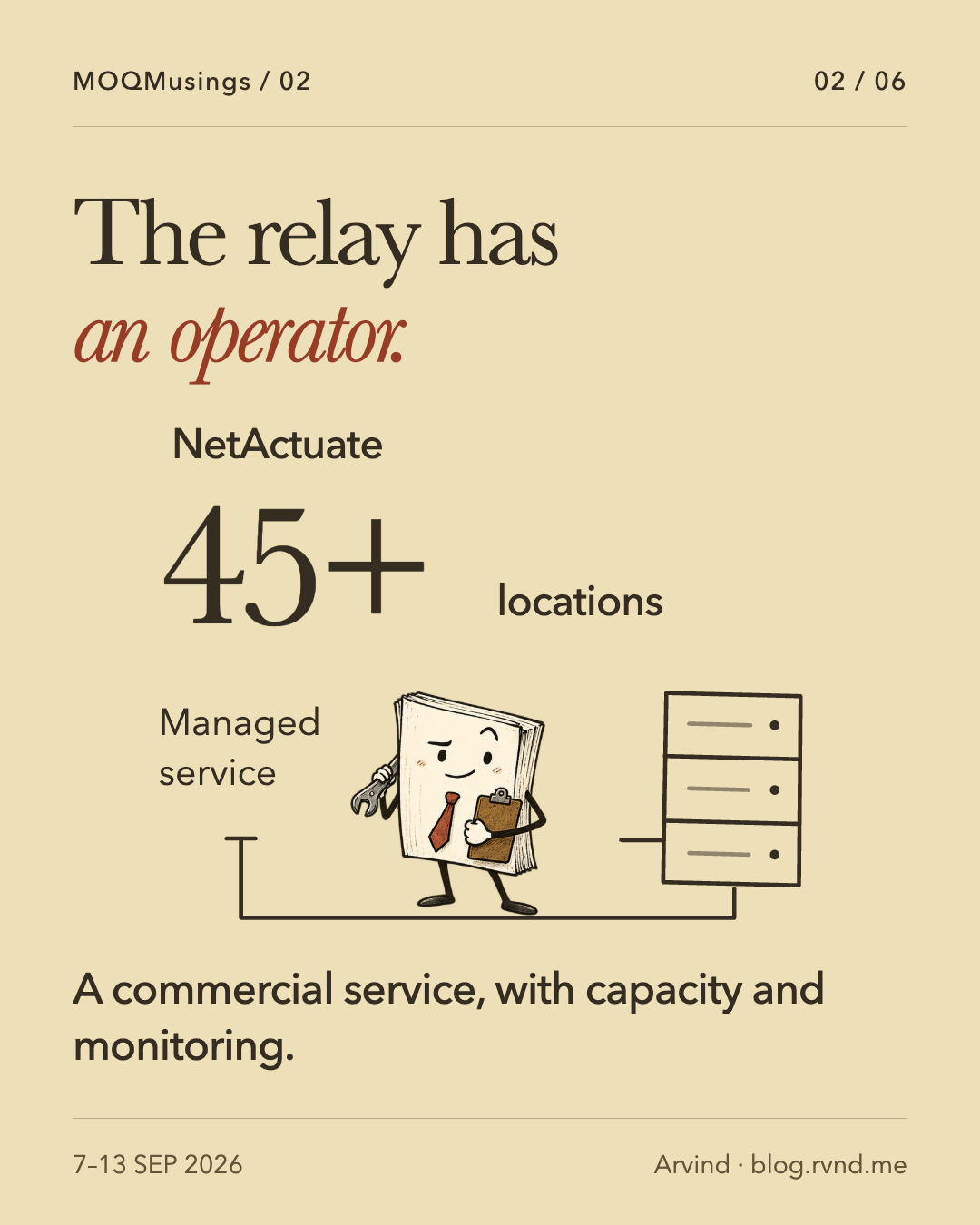
Also on September 8, NetActuate launched a managed MoQ Relay service across more than 45 locations.
That is a useful milestone because MOQ’s relay architecture has always produced an obvious follow-up question: fine, but who actually operates all these things?
NetActuate’s answer is essentially, “we do.” Customers get dedicated relay capacity, scoped namespaces, per-hop observability and an evaluation deployment without having to assemble the network themselves.
The company also published its own four-relay test, claiming one relay could fan out 16 times more video without increasing the backbone traffic used for the incoming feed. That is vendor testing, not an independent benchmark, but the managed offering itself is real enough to request and evaluate.
The relay has moved from architecture box to SKU.
Protocol adulthood is mostly invoicing.
Zattoo made the delay much smaller
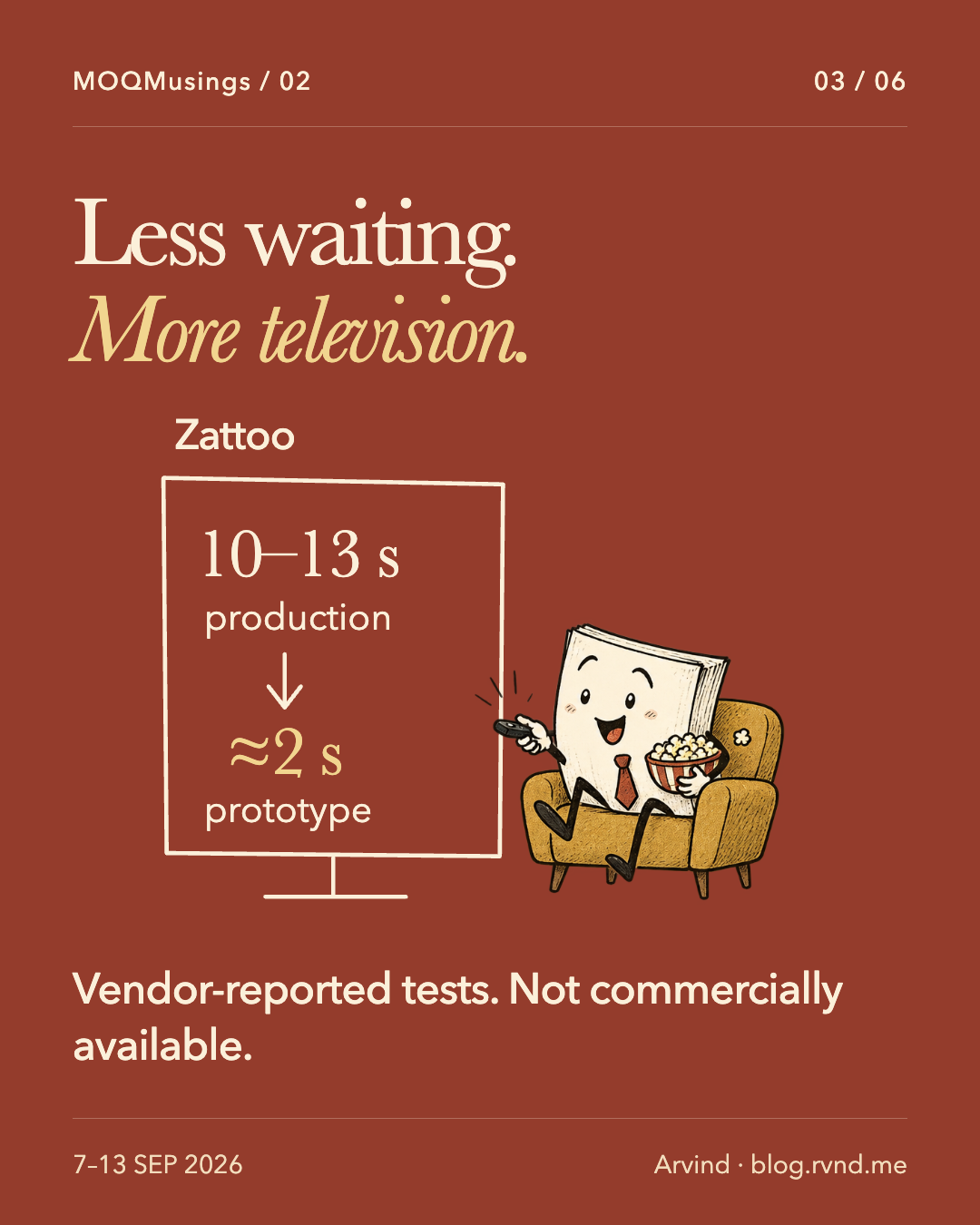
Zattoo brought a MOQ live-TV prototype to IBC and published a concrete result: in its tests, latency dropped by more than 80 percent, from the 10–13 seconds of its production platform to around two seconds.
The prototype takes live broadcast input through a relay and plays it in a browser, on Tizen WebTV and on Android TV. Zattoo says it runs on production hardware under real operator conditions.
Important qualifier: Zattoo explicitly says the prototype is not commercially available.
Still, two seconds on ordinary TV endpoints is the sort of demo that makes people stop discussing transport diagrams and start asking inconvenient product-roadmap questions.
IBC turned the relay diagram into a group project
The other noticeable IBC signal was multi-vendor topology.
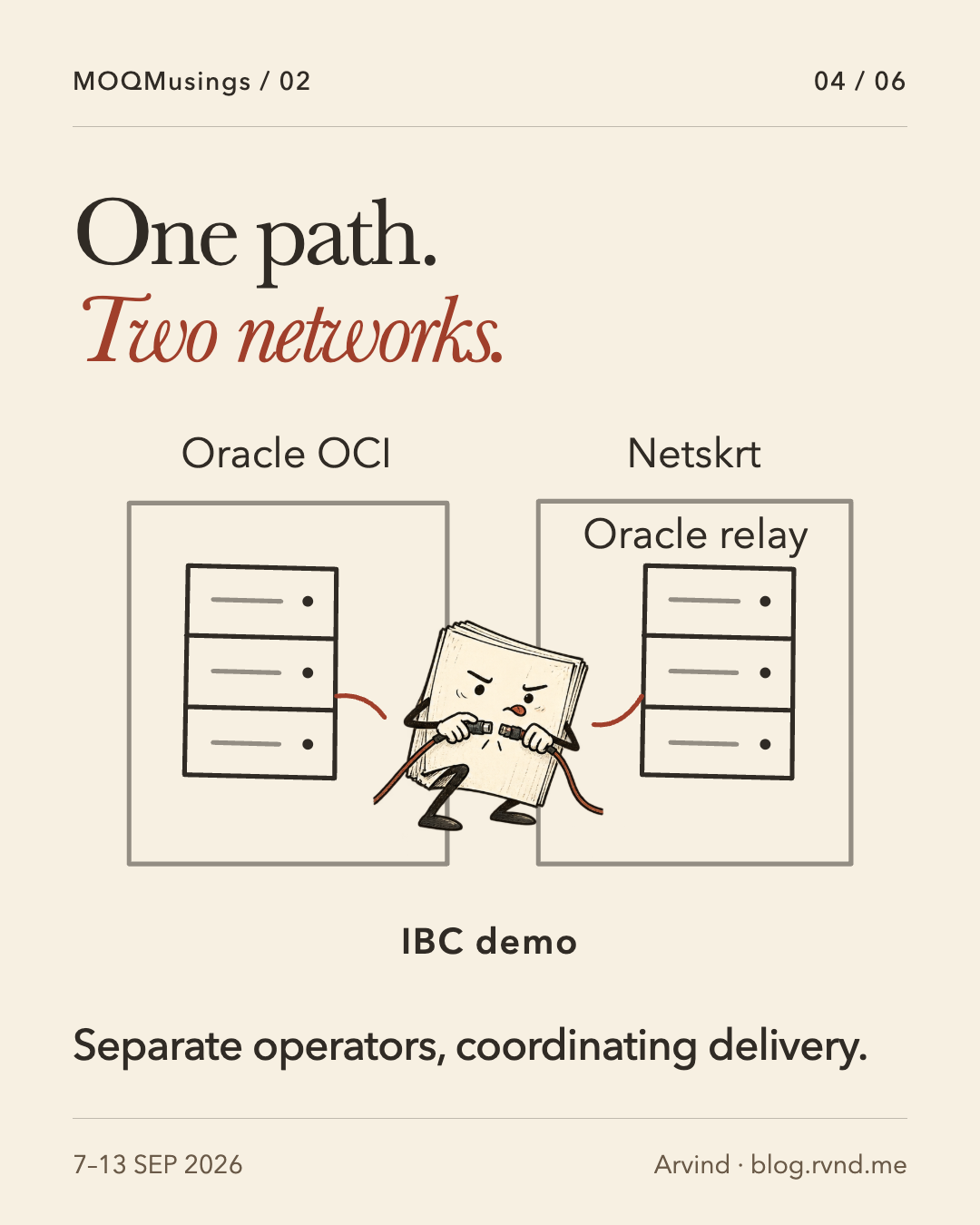
Netskrt announced that an Oracle Video Edge containerized relay would run inside Netskrt infrastructure and coordinate with Oracle’s relay network. The September 12 IBC programme then put Oracle, Paramount, Cloudflare and Netskrt together for Beyond Broadcast: MOQ for Live Delivery.
That matters less as a single demonstration than as an architectural direction. MOQ gets considerably more interesting when a relay owned by one company can participate in a path controlled by another, while a content owner and a public relay provider remain first-class participants rather than polite observers.
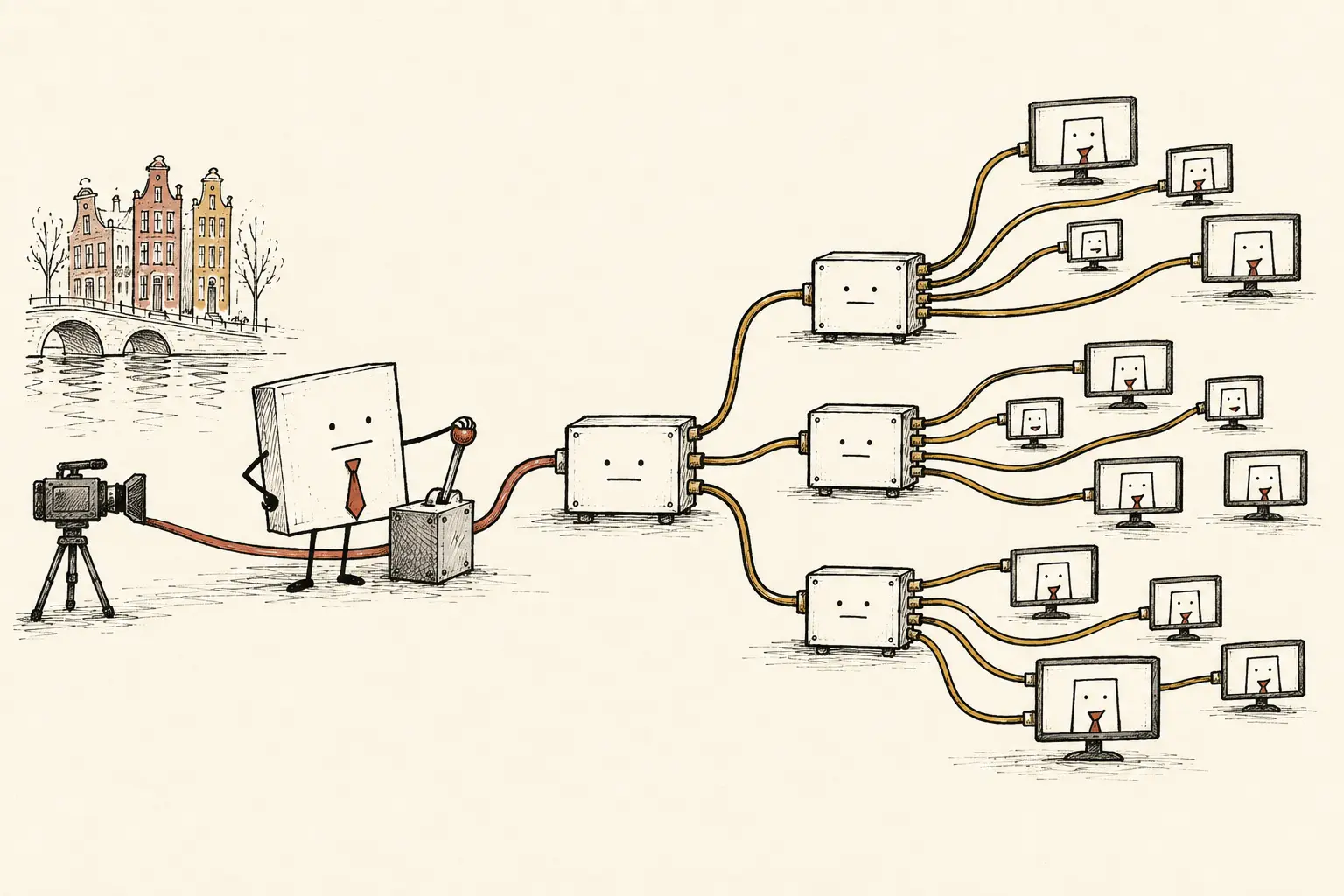
The internet already has plenty of CDNs. MOQ does not need another monolith. It needs the existing infrastructure to learn some new dance steps without stepping on each other.
Meanwhile, audio metadata went on a diet
One quieter IETF discussion deserves attention. The working group plans to send MPEG a liaison about LocMAF, a proposed compression approach for carrying CMAF efficiently over MOQ.
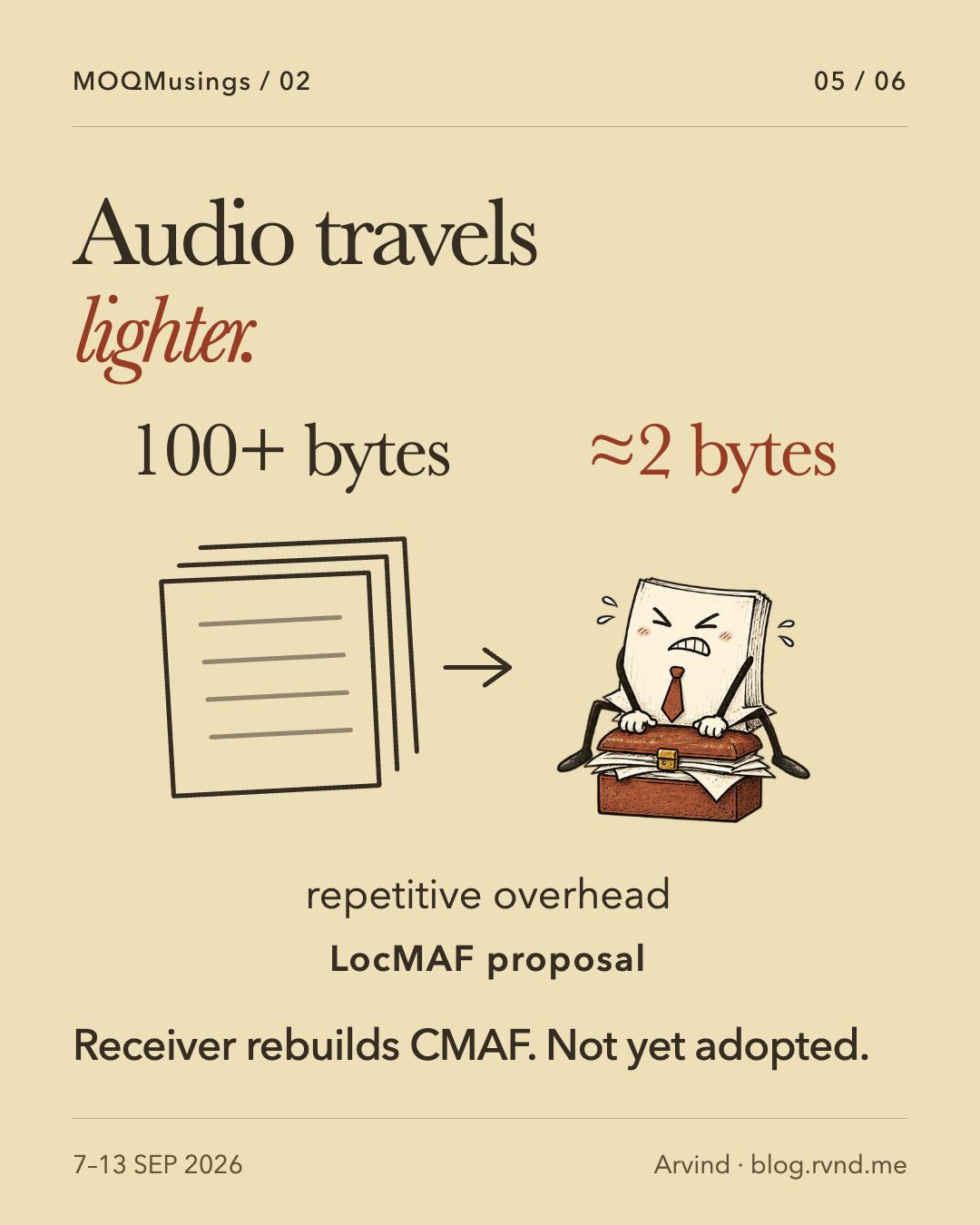
In the interim discussion, Torbjörn Einarsson explained that putting each low-latency CMAF audio frame into a MOQ object can introduce more than 100 bytes of repetitive overhead. LocMAF’s delta approach can reduce that to roughly 2 bytes, with the receiver reconstructing the full CMAF container.
The important status check: the LocMAF work discussed there has not yet gone through a formal MOQ Working Group adoption call. The chairs plan to notify MPEG first, wait for feedback, and then consider adoption.
Which is reassuring. Even experimental compression deserves the courtesy of telling the people whose format you are compressing.
The signal this week
Last week MOQ looked increasingly deployable.
This week it started looking operable.
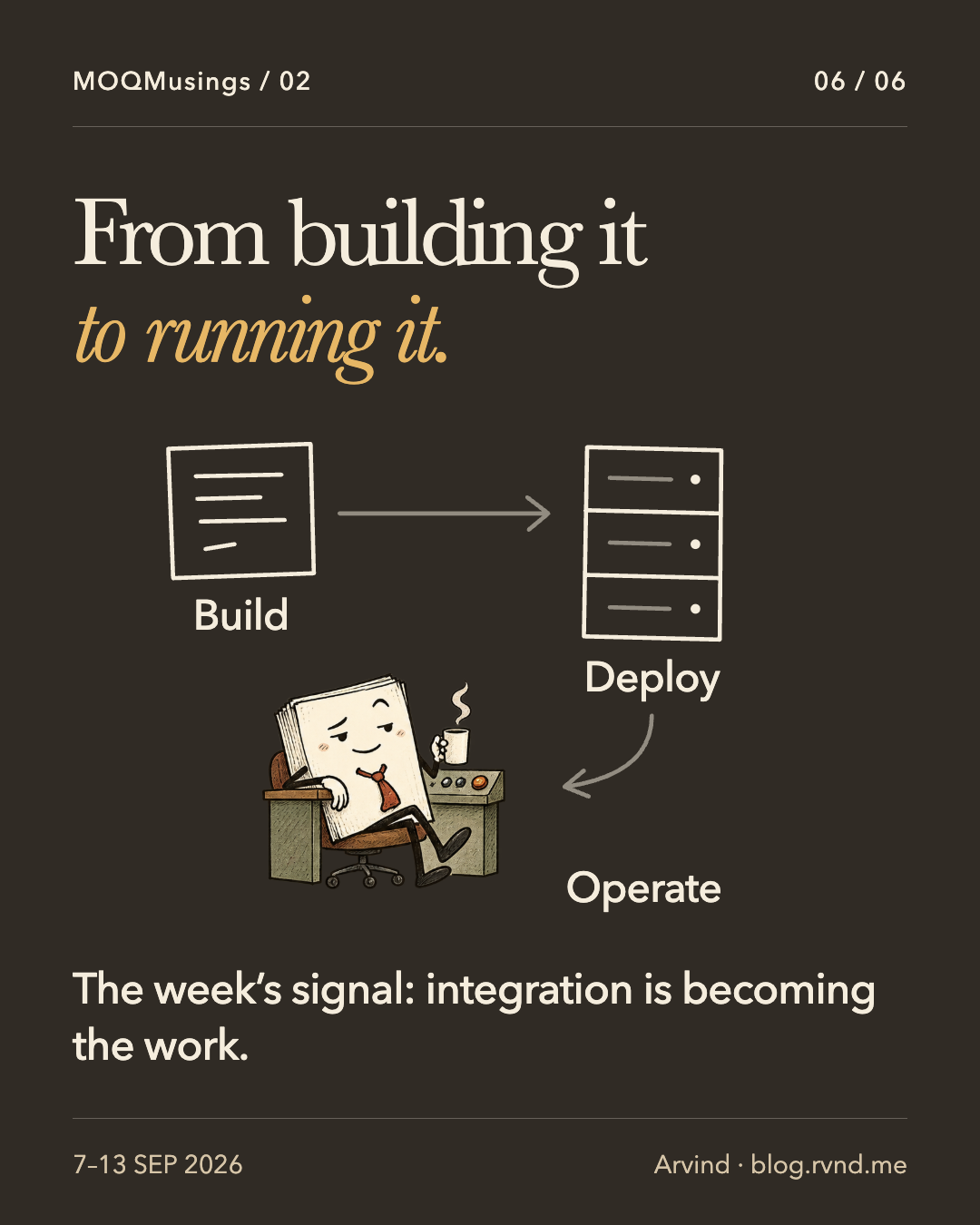
There is now a managed relay offering, a TV-platform prototype with a concrete latency result, a frozen interop target, cross-company relay work, and standards discussions about shaving packaging overhead instead of merely proving packets can move.
The protocol still has plenty of sharp edges. But the center of gravity is shifting from invention toward integration.
That is usually when things get less glamorous.
And much more useful.